
How to Reply to Every YouTube Comment and Still Have Time to Create
2026-10-16 · 7 min read
Every comment on your channel is a viewer who stopped scrolling, watched your work, and took the time to write to you. When those comments go unanswered, the message the viewer receives is silence — and silence is what turns an engaged audience quiet.
For a growing channel, this becomes a real source of stress. The backlog grows faster than it can be cleared. Replying starts to feel like a second job, so it gets postponed — and the longer it is postponed, the heavier it feels. This is the tension most creators live with: they know comments matter, but answering all of them seems impossible.
It is not impossible. It requires a system. This guide gives you one: a way to classify every comment, a standard for every reply, and a routine that keeps the comment section handled — so the stress disappears and the time goes back to creating.
Why every comment deserves an answer
A reply does three things at once. First, it tells the viewer they were heard, which is what turns a one-time watcher into a returning fan. Second, an active comment section invites more comments — people participate where conversation is visibly alive. Third, comments are the most honest feedback a channel can get: questions reveal what to explain next, and requests reveal what to film next.
The goal is not to write long essays under every comment. The goal is for no viewer to feel ignored. That is achievable when you match the effort to the type of comment.
The five types of comments — and the right response to each
1. Praise
Example: "This video is amazing!"
Thank the viewer and reference one specific detail from their comment or from the video. A generic "Thanks!" repeated fifty times reads as automated. One detail is what makes it human.
Thank you. I am glad the editing section landed — that part took the longest to film.
2. Questions
Example: "Does this work on Windows too?"
Answer briefly, then point to a timestamp or a related video. Questions carry the highest value of any comment type, because every reader of the thread benefits from the answer.
Yes — the same steps apply on Windows. The part you need is at 3:42 in the video.
3. Fair criticism
Example: "The audio is muffled. I could barely hear half of it."
Acknowledge what is true and state what you will change. No excuses, no counter-attack. A creator who listens publicly earns more respect than one who is never wrong.
Fair point — the audio let this one down. I recorded too far from the microphone. The next video will be recorded closer.
4. Trolls and spam
Example: "First" — or a hostile one-liner.
Do not engage. The correct response to troll bait is no response: hide or report the comment and move on. A public argument costs time and makes the comment section look hostile to every other reader.
5. Video requests
Example: "Please make a video about X!"
Acknowledge the idea and keep a running list. Requests are a content calendar writing itself.
Adding this to my ideas list — if it becomes a video, you will get a shoutout.
The standard for every reply: concise, specific, authentic
Every reply you send should meet three standards:
- Concise: one to three sentences covers most comments. Long replies consume your time and are rarely read in full.
- Specific: reference one detail from the comment. That single detail is the difference between a real reply and a copy-paste.
- Authentic: write the way you speak. If a reply reads like a press release, rewrite it.
A sustainable daily routine
Do not attempt to clear a large backlog in one sitting. Instead, set aside 15 focused minutes a day, in this order:
- Questions first — they help the most people.
- Praise next — thank each viewer with one specific line.
- Fair criticism — answer one or two honestly.
- Trolls — hide them without engaging.
- Requests — save them to your ideas list.
When the time is up, stop. Consistency outperforms marathon sessions: fifteen minutes a day keeps a comment section alive without consuming the time meant for filming.
When the volume outgrows the routine
There comes a point where fifteen minutes a day is no longer enough — and that is a good problem. It means the channel is growing. At that point, creators need help that does not compromise their standards: drafts prepared for them, decisions still made by them.
That is how ReplyFans works. It prepares a draft reply for every comment. You review each one in the approval queue — approve, edit, or reject. Nothing is posted without your approval, and approved replies go out with a natural, human-like delay.
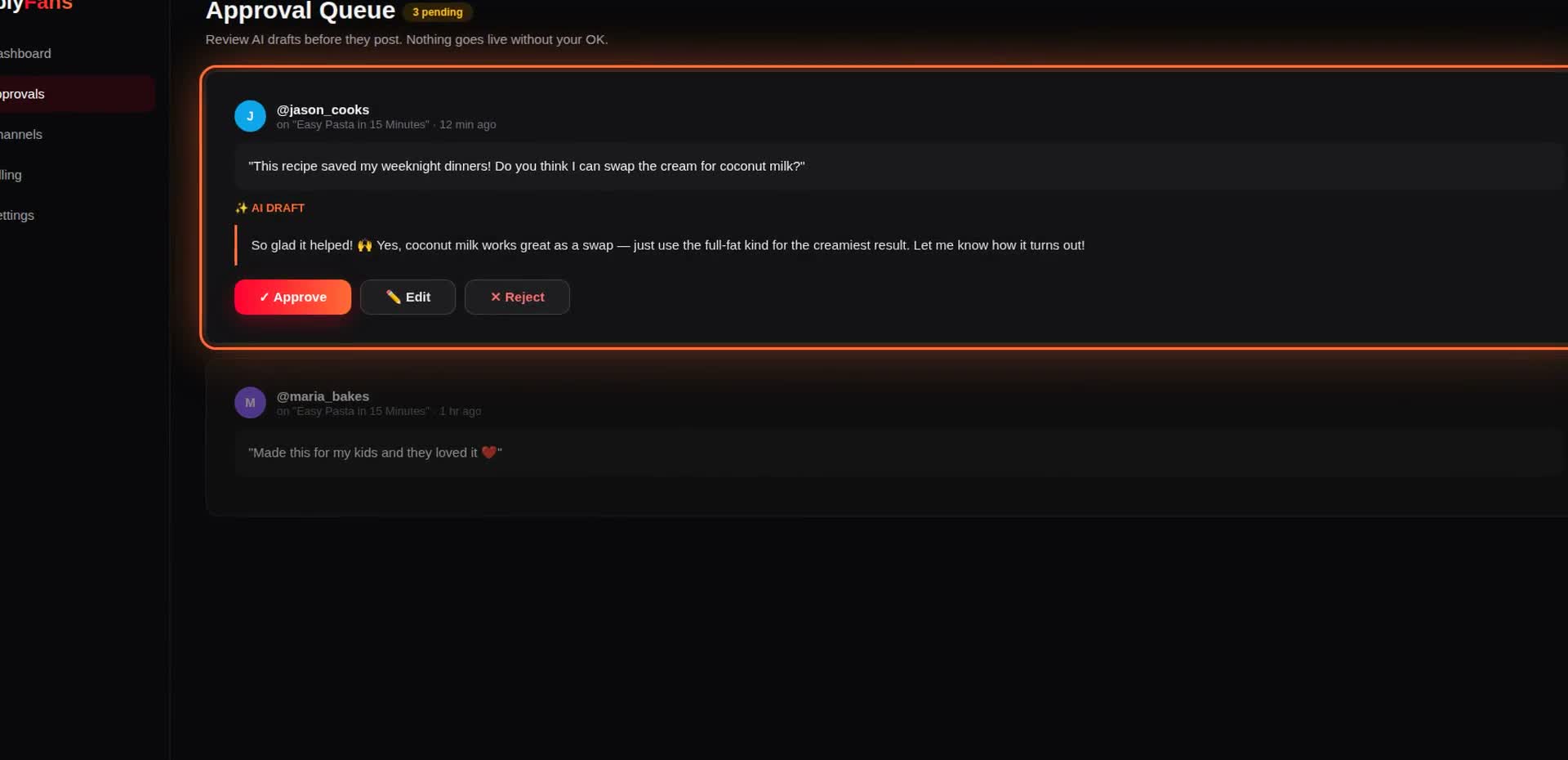
The ReplyFans approval queue: every draft is reviewed before it is posted. Nothing goes live without your approval.
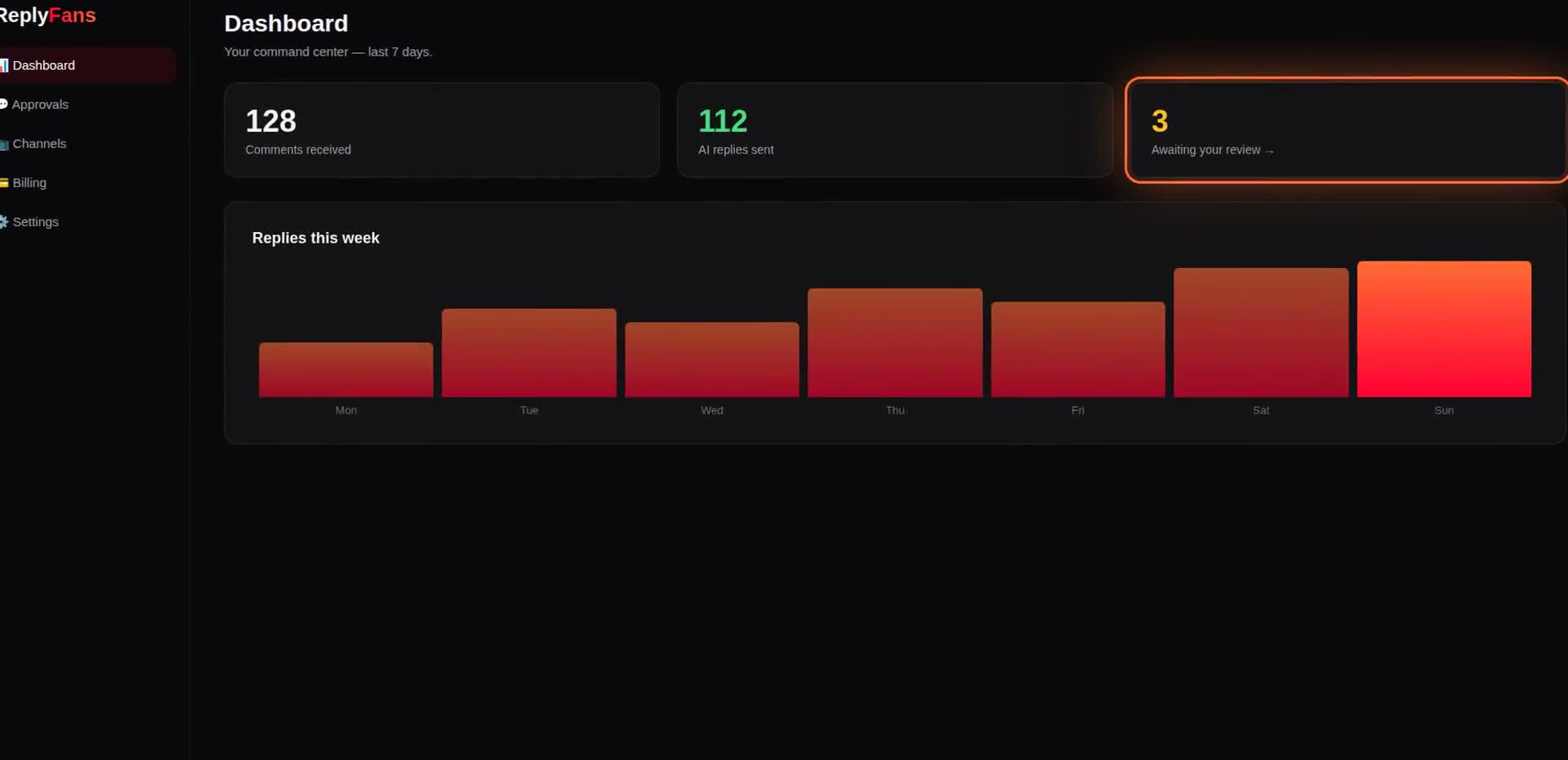
The result is the relief creators describe when the backlog finally clears: the tension is gone, every viewer feels heard, and the hours that used to go to the comment section go back to creating. The dashboard shows the outcome plainly — every comment accounted for, replies sent, and only the few items awaiting review left to decide.
Watch: a tour of the ReplyFans dashboard — comments, replies, and approvals in one place.
The compounding effect
When viewers feel heard, they comment again. They return for the next video. They recommend the channel to others. The comment section stops being a source of stress and becomes what it was always meant to be: a community that grows with the channel.
Start today. Open your latest video, set a fifteen-minute timer, and answer ten comments using the framework above. Repeat tomorrow. Within a week, replying will feel like a habit instead of a burden — and your audience will notice the difference. See ReplyFans plans.
Never leave a comment unanswered
ReplyFans replies to your YouTube comments in your voice, 24/7 — so you can focus on creating.